
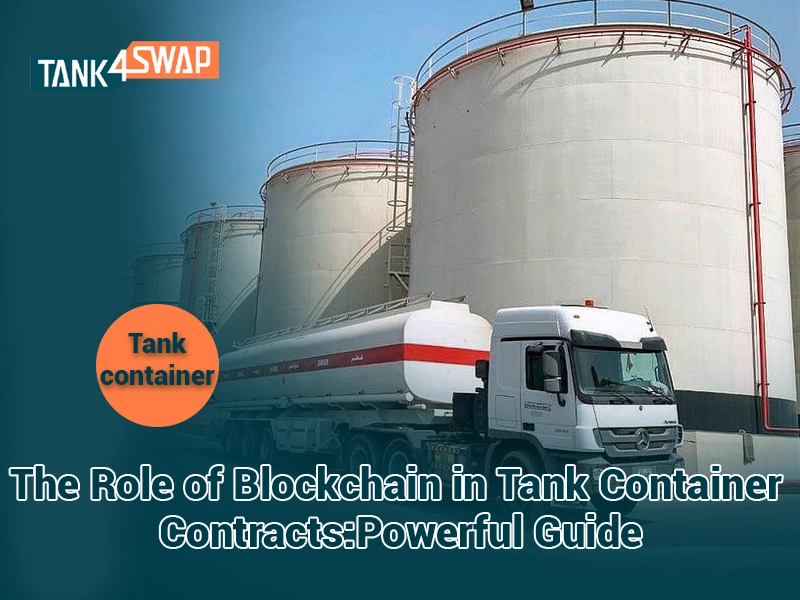
In today’s fast-paced world of global logistics, the The Role of Blockchain in Tank Container Contracts has become one of the most important topics for companies handling chemicals, food ingredients, hazardous materials, and bulk liquids. As supply chains become more international and more complex, businesses are searching for secure, transparent, and automated solutions that reduce errors and keep products safe during transport. Blockchain has quickly emerged as a game-changing technology that helps solve long-standing challenges in tank container management.
This guide dives deep into how blockchain works, why it matters, and the powerful impact it has on contracts, compliance, and global logistics operations.
Understanding the Role of Blockchain in Tank Container Contracts
Tank container contracts control every detail of transporting bulk liquids—from filling and inspection to cleaning, delivery, and return. These contracts involve multiple stakeholders such as shippers, carriers, chemical companies, cleaning depots, and regulatory authorities. Because so many parties are involved, managing documentation is often challenging.
Blockchain technology introduces a secure, decentralized way to record contract terms, automate compliance steps, and track container activity in real time. By storing data in blocks that cannot be changed, blockchain protects companies from fraud, duplicated documents, disputes, and human errors.
What Are Tank Container Contracts in Global Logistics?
A tank container contract defines:
- Equipment rental terms
- Cleaning and inspection requirements
- Temperature, pressure, and safety rules
- Delivery deadlines
- Hazardous material handling guidelines
- Liability responsibilities
Since tank containers transport sensitive and often dangerous materials, accuracy and transparency are essential.
Why Traditional Tank Container Documentation Faces Limitations
The older paper-based process leads to:
- Slow contract approvals
- Lost or altered documents
- Disputes between suppliers and carriers
- Difficulty tracing contamination or damage
- Manual errors
- Weak transparency
Blockchain solves these issues by using shared digital ledgers that update instantly across all parties.
How Blockchain Transforms Tank Container Management
Blockchain brings automation, clarity, and security to global logistics. Its decentralized nature ensures every step of contract creation, approval, and execution is visible and verifiable.
Smart Contracts and Automated Agreement Execution
A smart contract is a self-executing digital agreement stored on the blockchain. For tank containers, smart contracts can automatically:
- Trigger cleaning steps
- Approve inspections
- Release payments
- Update container conditions
- Document hazardous material compliance
Automation reduces delays, labor costs, and contract disputes.
Enhancing Transparency Across the Tank Container Supply Chain
With blockchain:
- Every stakeholder accesses the same data
- Contract stages update instantly
- Container conditions remain traceable
- Manipulation becomes impossible
This level of clarity builds trust and improves communication.
Immutable Records and Reduced Contract Disputes
Once information is added to the blockchain, it cannot be changed. This protects companies from falsified documents and allows quick resolution of disagreements, especially related to:
- Damage
- Delays
- Cleaning standards
- Safety violations
Immutable records strengthen accountability.
Key Benefits of Using Blockchain Technology
Blockchain benefits extend across the entire tank container lifecycle.
Faster Verifications and Lower Administrative Costs
Because blockchain eliminates manual paperwork, tasks like verifying signatures, confirming cleaning certificates, and approving temperature logs become nearly instant.
Improved Security and Fraud Prevention
Blockchain protects sensitive cargo and contract information from unauthorized edits or cyber threats. Every data block is:
- Encrypted
- Time-stamped
- Verified across the network
This dramatically reduces fraud and security breaches.
Compliance & Safety
Safety is one of the most important reasons companies use blockchain in tank container logistics. Many bulk liquids require strict regulatory oversight.
Ensuring Accurate Hazardous Material Tracking
Blockchain ensures that hazardous materials follow legal guidelines throughout the journey. It provides:
- Verified safety documentation
- Real-time condition logs
- Proper labeling and classification
- Traceability of every handling step
Improving Cleaning, Inspection, and Certification Processes
Blockchain makes it nearly impossible for cleaning depots or carriers to skip essential steps. Every action becomes traceable, including:
- Certification signatures
- Tank lining inspections
- Contamination reports
- Temperature logs
This dramatically reduces safety risks.
Real-World Applications of Blockchain in Tank Container Operations
Blockchain adoption is growing across industries that depend heavily on bulk liquid transport.
Examples From Chemical, Food, and Pharmaceutical Logistics
- Chemical companies use blockchain to trace hazardous liquids.
- Food suppliers track hygiene and contamination risks in transport.
- Pharmaceutical companies rely on blockchain to ensure temperature-sensitive liquids remain stable.
Companies such as Maersk and IBM have already implemented blockchain-based tracking systems in global logistics.
Challenges to Adopting Blockchain in Tank Container Contracts
Adopting blockchain in tank container logistics comes with several practical challenges. First, integrating blockchain with older systems is technically difficult and often expensive. Many companies also face high initial setup costs—such as software upgrades, digital sensors, and staff training.
Another major challenge is the lack of global standardization. Since tank containers move across multiple countries with different regulations, companies struggle to implement a system that works everywhere. Regulatory uncertainty makes it even harder, as some regions still do not fully recognize blockchain-based documentation.
Data privacy concerns also play a role. Because blockchain is transparent, companies must ensure sensitive operational or commercial information remains protected. Finally, resistance to change within the logistics industry and the need for scalable, high-performance blockchain networks can slow adoption.
Despite these challenges, blockchain continues to move forward as a promising solution for improving safety, compliance, and efficiency in tank container operations.
Future Trends: How Blockchain Will Shape Tank Container Logistics
The future is promising. We expect:
- Fully automated smart contract networks
- Global blockchain standards for tank containers
- AI-powered inspections
- Enhanced real-time digital twins
- Zero paperwork logistics systems
Blockchain is clearly becoming the foundation for the next generation of tank container operations.
FAQs About the Role of Blockchain in Tank Container Contracts
-
What is the main purpose of blockchain in tank container contracts?
To secure, automate, and verify every step of contract management and container handling.
-
How does blockchain improve safety in tank container transport?
It creates a transparent record of cleaning, inspection, and hazardous material documentation.
-
Can blockchain reduce transportation costs?
Yes. It removes manual paperwork, reduces delays, and prevents costly disputes.
-
Is blockchain secure enough for sensitive cargo data?
Absolutely. Its decentralized structure prevents unauthorized access or edits.
-
How do smart contracts help with tank container operations?
They automate tasks like cleaning approvals, equipment releases, and digital payments.
-
Which industries benefit the most from blockchain in tank container contracts?
Chemical, pharmaceutical, food, and oil & gas industries benefit significantly.
Conclusion
The The Role of Blockchain in Tank Container Contracts is becoming increasingly important as global logistics evolves. Blockchain provides unmatched transparency, security, and automation, making it ideal for managing complex tank container operations. From reducing disputes to ensuring hazardous material compliance, blockchain is reshaping the future of global supply chains—one contract at a time.
For further reading, visit a trusted logistics resource such as Logistics Management
Contact TANK4SWAP for Professional Flexi Tank Discharge Support
Looking for expert help with your Flexi Tank discharge system? The TANK4SWAP support team is ready to assist you every step of the way. Whether you need guidance on choosing the right discharge method, troubleshooting unloading difficulties, or improving overall efficiency, our specialists deliver customized solutions tailored to your bulk liquid transport requirements.
At TANK4SWAP, we make sure your Flexi Tank discharge process remains safe, efficient, and cost-effective. From gravity-based unloading to pump-assisted and air-pressurized systems, our experts provide the insights you need to maximize product recovery while reducing waste.
Why Partner With TANK4SWAP?
✔️ Specialized Expertise – Professional recommendations tailored to your discharge needs
✔️ Efficiency Improvements – Strategies to speed up unloading and minimize losses
✔️ Trusted Guidance – Support on safety, compliance, and industry best practices
📞contact us:
Get in touch with TANK4SWAP today for reliable Flexi Tank discharge assistance and enjoy a smooth, trouble-free unloading experience.
