
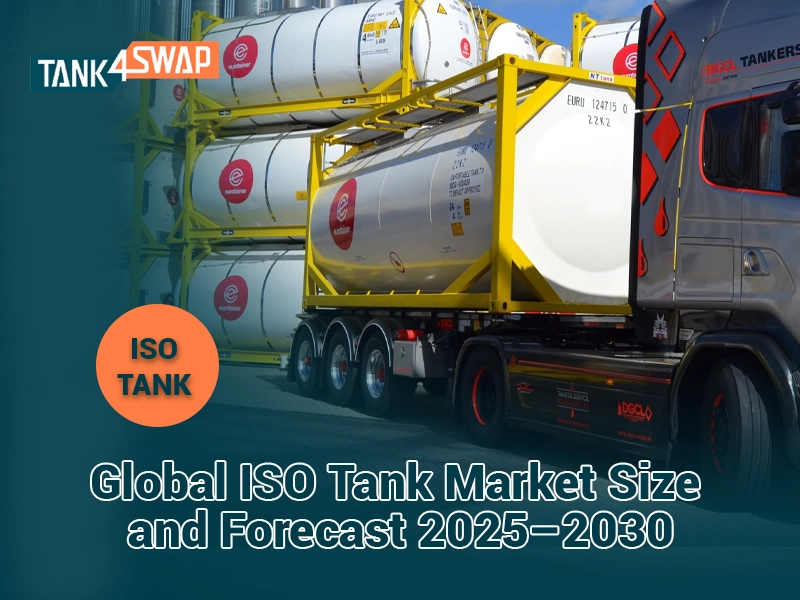
The global ISO tank market refers to the market for standardized intermodal containers — commonly called “ISO tanks” — designed for bulk transportation of liquids, gases and powders across sea, rail and road. In an era of increasing global trade, logistics efficiency and safety requirements, the global ISO tank market size and forecast for 2025–2030 become critical in understanding how bulk-transport infrastructure will evolve.
Definition and Importance of ISO Tanks
An ISO tank is a standardized intermodal container designed to safely transport bulk liquids, gases, or powders across different modes such as sea, road, and rail. These tanks comply with strict international standards, ensuring durability and safety for both hazardous and non-hazardous materials. Their design minimizes spillage, enhances cost efficiency, and supports sustainable logistics, making them vital to global trade and chemical supply chains.
Current Market Size Overview (2025)
As of 2025, the global ISO tank market is valued at approximately USD 1.6–1.8 billion, reflecting robust growth in logistics infrastructure and international trade. The chemical and food-grade sectors are the largest consumers of ISO tanks due to increasing global demand for safe and standardized transport. Rising adoption in developing regions like Asia-Pacific further contributes to market expansion.
Strategic Analysis of the Global ISO Tank Market Forecast Through 2030
The market is projected to grow at a compound annual growth rate (CAGR) of around 8–10%, reaching USD 2.5–3.0 billion by 2030. This growth is fueled by intermodal transport efficiency, technological advancements, and stricter safety regulations. Additionally, the rise of cryogenic and hydrogen applications will create new opportunities for ISO tank manufacturers and logistics companies.
How the Global ISO Tank Market Forecast Reflects Rising Intermodal Demand
Major factors driving the global ISO tank market include expanding chemical exports, rising demand for bulk liquid transport, and environmental regulations promoting reusable containers. The shift from traditional drums and flexitanks to ISO tanks reduces waste and enhances efficiency. Growth in LNG, hydrogen, and food-grade liquids further strengthens market demand globally.
Market Challenges and Restraints
Despite promising growth, the market faces several obstacles such as high capital investment, maintenance costs, and fluctuating stainless-steel prices. Regulatory differences across regions can slow market penetration. Additionally, overcapacity in mature markets and limited infrastructure in developing countries pose ongoing challenges for logistics providers.
Segmentation by Container Type
ISO tanks are classified into types like cryogenic, multi-compartment, and swap-body containers. Cryogenic tanks hold the largest share, driven by rising demand for transporting LNG, hydrogen, and industrial gases. Standard liquid and lined tanks also maintain steady growth, offering safe transport for chemicals, beverages, and food-grade materials worldwide.
Segmentation by Transport Mode
The ISO tank market operates across road, rail, and marine modes, with intermodal transport leading due to flexibility and cost-efficiency. Marine transport accounts for a large share of international trade, while road and rail dominate regional distribution. Integration between these modes enhances supply chain performance and reduces overall logistics costs.
End-Use Industries Influencing the Global ISO Tank Market Forecast
Key end-use industries include chemicals, petrochemicals, food & beverage, and pharmaceuticals. The chemical sector dominates due to strict handling and storage regulations for hazardous materials. Meanwhile, the food and beverage industry increasingly adopts ISO tanks for edible oils, syrups, and juices, benefiting from hygiene and leak-proof features.
Regional Insights Shaping the Global ISO Tank Market Forecast
The ISO tank market shows diverse regional performance. Asia-Pacific holds the largest share, followed by North America and Europe. Rapid industrialization, strong export markets, and government investments in logistics drive growth in APAC. Meanwhile, emerging economies in MEA and Latin America are developing infrastructure to support future demand.
Asia-Pacific Market Insights
Asia-Pacific leads the global ISO tank market, accounting for over 40% of total revenue. China, India, and Japan dominate due to expanding manufacturing bases and chemical exports. The region’s growing trade routes and increasing adoption of sustainable logistics solutions make it the fastest-growing market between 2025 and 2030.
North America Market Insights
North America remains a mature and stable market supported by robust chemical, petroleum, and industrial gas sectors. The U.S. and Canada continue to invest in modern ISO tank fleets to ensure regulatory compliance and supply chain safety. Demand for cryogenic and LNG tanks is increasing, aligning with the region’s clean energy goals.
Europe Market Insights
Europe maintains strong growth through regulatory excellence, advanced engineering, and a focus on sustainability. EU standards encourage the use of ISO tanks for hazardous goods and food-grade transport. While the market is relatively mature, innovation in materials and eco-friendly designs is driving gradual but steady expansion.

MEA and Latin America Outlook
The Middle East and Africa (MEA) and Latin America are emerging regions with significant potential in ISO tank adoption. Their growth is driven by expanding petrochemical exports, LNG projects, and agricultural product transport. Infrastructure upgrades, particularly in ports and intermodal facilities, will enhance future market growth in these areas.
Competitive Landscape Impact on the Global ISO Tank Market Forecast
The ISO tank market is moderately consolidated, featuring global leaders and regional specialists. Companies compete on technology, durability, and global service coverage. Key firms are expanding manufacturing capacity and offering leasing models to attract more customers, while smaller players focus on niche applications and regional partnerships.
Key Players and Market Strategies
Leading companies such as CIMC, Singamas, Welfit Oddy, and CXIC Group dominate production. Their strategies include mergers, capacity expansions, and introducing smart ISO tanks with IoT tracking systems. By targeting high-demand sectors and emerging markets, these firms strengthen their global presence and long-term competitiveness.
Technology, Sustainability, and the Global ISO Tank Market Forecast
Innovation is transforming the ISO tank industry. IoT-enabled monitoring, advanced insulation materials, and cryogenic technology are becoming standard features. Smart tanks allow real-time data tracking, improving safety and efficiency. These advancements not only boost performance but also align with sustainability and carbon-reduction goals.
Market Opportunities
Future opportunities lie in hydrogen transport, LNG logistics, and renewable energy applications. The growing adoption of leasing models and demand for food-grade and pharmaceutical tanks also open new revenue streams. Companies investing in digital logistics and eco-friendly tank designs will benefit most from this expansion.
Risks and Limitations
Key risks include fluctuating raw material prices, trade disruptions, and environmental compliance costs. Overproduction in certain regions may reduce profit margins, while geopolitical instability can disrupt transport routes. Companies must adopt flexible strategies and maintain compliance to minimize these operational risks.
Regulations and Sustainability Impact
Regulations governing hazardous materials transport and emission standards significantly influence the ISO tank market. Compliance with international codes like ADR and IMDG ensures global acceptance. Sustainability trends are pushing companies toward recyclable materials, energy-efficient operations, and reduced carbon emissions across logistics chains.
Conclusion
The Global ISO Tank Market is set for consistent growth through 2030, fueled by rising international trade, stricter safety regulations, and the push for sustainable logistics. With innovation in smart monitoring, cryogenic storage, and eco-friendly design, ISO tanks are becoming the preferred solution for bulk liquid transport. Companies that invest in technology, expand into emerging regions, and adapt to environmental standards will be best positioned to capture the next wave of global logistics opportunities.
Frequently Asked Questions (FAQs)
Q1: What discharge methods do you support for Flexi Tanks?
A1: We support gravity discharge, pump-assisted systems, and air-pressurized unloading.
Q2: How quickly can you help troubleshoot an unloading problem?
A2: Our team provides immediate remote guidance and schedules on-site support as needed.
Q3: Can you help maximize liquid recovery and reduce waste?
A3: Yes — we recommend and implement optimized discharge setups and best-practice procedures.
Q4: Do you provide guidance on safety and regulatory compliance?
A4: Absolutely — we advise on safety protocols, documentation, and regional compliance requirements.
Q5: Are customized solutions available for unique cargo types?
A5: Yes — we tailor discharge systems to the specific liquid properties and operational constraints.
Q6: Do you offer equipment rental or only consultancy?
A6: We provide both expert consultancy and access to recommended discharge equipment or rental partners.
Contact TANK4SWAP for Professional Flexi Tank Discharge Solutions
Looking for reliable Flexi Tank discharge support? The TANK4SWAP technical team is ready to assist! Whether you need expert advice on choosing the ideal discharge method, resolving unloading issues, or improving operational efficiency, we deliver customized solutions to optimize your bulk liquid handling.
At TANK4SWAP, we make sure every stage of your Flexi Tank discharge process is safe, efficient, and cost-effective. From gravity-based unloading to pump-assisted and air-pressurized systems, our professionals guide you in selecting the best option to maximize liquid recovery and minimize product loss.
Why Partner with TANK4SWAP?
✅ Expert Consultation – Tailored recommendations for your unique discharge setup
✅ Enhanced Efficiency – Proven methods to boost unloading speed and reduce waste
✅ Trusted Support – Guidance on safety standards, compliance, and best practices
📞contact us:
Get in touch with TANK4SWAP today to receive professional assistance with your Flexi Tank discharge system and ensure a smooth, reliable, and hassle-free unloading operation!
